Wood Decks
Cedar and other wood decking with the warm look, grain and repair options of natural lumber.
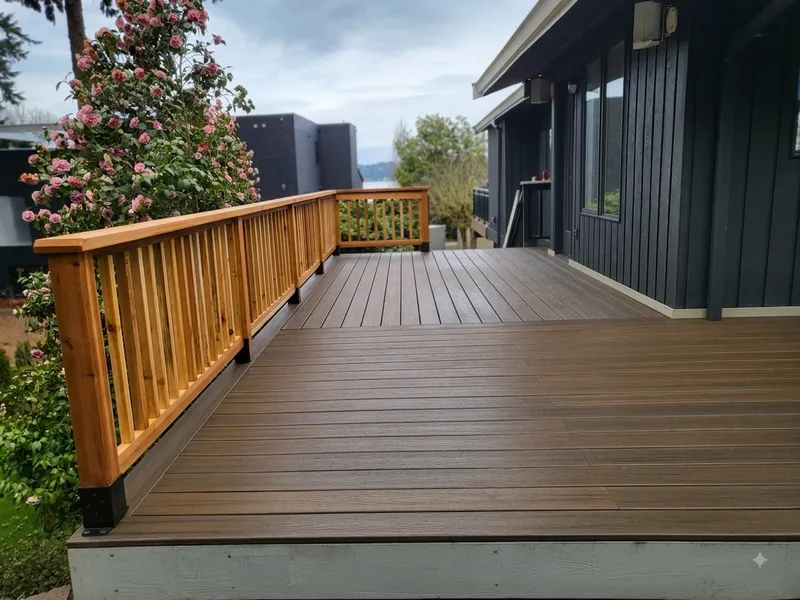
Trade 04 · Decks
Wood, composite and Trex deck systems that extend the home with durable surfaces, stairs and railings.
Sub-services
Cedar and other wood decking with the warm look, grain and repair options of natural lumber.
Composite boards that hold color and need less routine upkeep, with Trex and other manufacturers as options.
From low platforms near the lawn to raised decks off the main floor, each framed for its height and loads.
Comfortable, consistent stairs and landings that fit the deck and the grade.
Wood, composite or metal railing designed for safety, views and the look of the house.
Built-ins and lighting that fold seating, greenery and safety into the deck.
Decks
The boards are what you see, but the footings, framing, ledger connection and flashing are what keep a deck safe. A deck attached to the house has to shed water away from it and be fastened so it carries real loads.
That is why we start with the structure and the connection points, then choose the decking, rails and details you will see and touch every day.
Make it yours
Straight runs, diagonal patterns and a picture-frame border change how large and finished a deck feels.
Wood, composite, cable or metal balusters trade off views, upkeep and how traditional or modern the deck looks.
Wider stairs, wrap-around steps and landings make the deck feel connected to the yard.
Seating and planters keep the deck usable without extra furniture.
Low-profile lights on stairs, posts and rails improve safety and mood. We plan them with the framing.
Suppliers & collections
Decking, railing and lumber come from suppliers and manufacturers we work with or can source through. Compare options, then send us the products you like. Product availability, colors and pricing can change, so a saved link is a selection request, not a guarantee.
Maple Valley lumberyard for cedar decking, railing and building materials.
Visit TRM Wood Products (opens in a new tab)Composite decking and railing. Browse colors and profiles before we confirm selections.
Visit Trex (opens in a new tab)Composite and PVC decking and railing options for inspiration and product details.
Visit TimberTech (opens in a new tab)Composite decking and railing lines to compare before final selection.
Visit Fiberon (opens in a new tab)Explore supplier collections, paste the product links you like into your project request, and we will confirm availability, suitability and pricing during design and estimating.
Explore all materials6 Steps
We study the elevation, house connection, drainage, access and how you want to use the deck, then settle layout, stairs and railings.
Where a permit is required we coordinate the approval, and we locate utilities before digging footings.
Footings are set to the plan and the soil so the structure sits on stable ground.
Posts, beams and joists are framed accurately, with the house connection properly flashed and fastened.
Boards, stairs and railings are installed with exterior-rated fasteners and the details your design calls for.
We clean up and review care, finishing or sealing needs and anything left to discuss.
Workmanship coverage and credentials are confirmed in writing with your proposal.
Factors, not prices
Overall size drives the framing and the quantity of boards.
A higher deck needs more structure, longer stairs and more railing.
Wood, composite and railing types differ in material and installation cost and in long-term upkeep.
More steps, wider stairs or landings add scope.
Slope, access and soil influence footings, staging and labor.
Lighting, built-in benches, skirting and under-deck work are priced with the rest of the project.
Every property is different. After we assess yours, your proposal sets out the written scope, options and pricing assumptions.
Decks
Wood offers natural character and easier repairs; composite generally asks for less routine upkeep. We compare appearance, maintenance, budget and your priorities for the specific deck.
Many decks do, especially raised decks and those attached to the house. Requirements depend on your city or county and the scope. We confirm what applies during the property assessment.
In many cases, yes. We evaluate what is in place and recommend whether to rebuild the surface, rebuild the structure or start over.
Yes. Stair, post and ambient lighting are easiest to plan before the deck is framed.
Size, height, materials, stairs and railings, access and extras all play a part. You receive a written scope and pricing after we assess your property.
Tell us what you want to change and any materials that have caught your eye. We will help you understand the right next step.