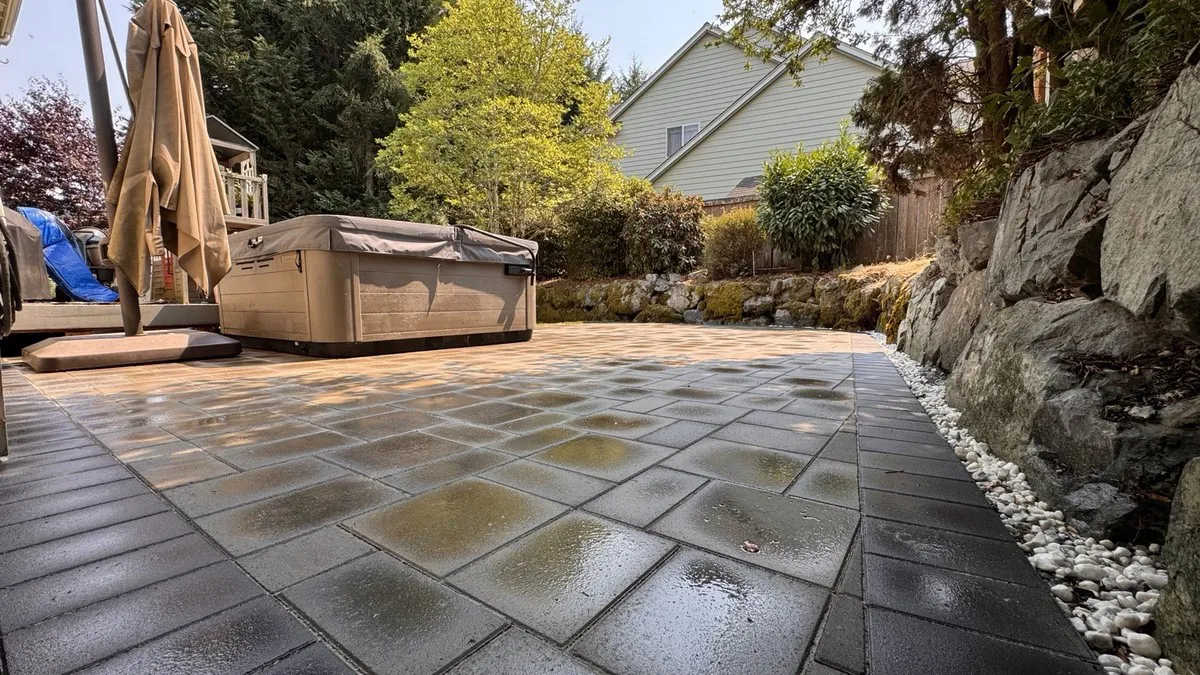
Patios & Entertaining Areas
Dining, lounge and fire-pit zones sized and shaped around how you actually use the yard.
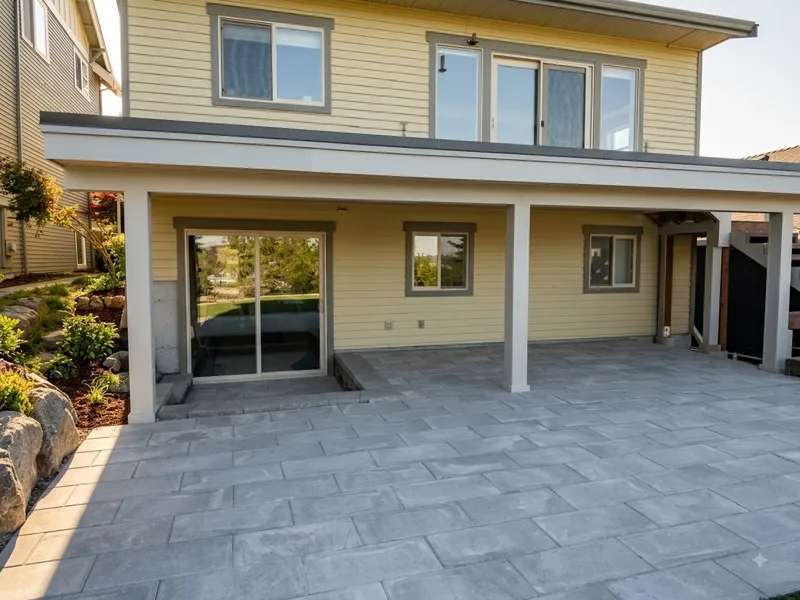
Trade 01 · Paver Patios
Purpose-built patios, courtyards, pool surrounds and borders designed around how you gather and move.
Sub-services
Dining, lounge and fire-pit zones sized and shaped around how you actually use the yard.
Comfortable routes from the driveway, door or gate to the places you go, with edges that hold.
Defined outdoor rooms that pick up lines and materials from the house.
Surfaces chosen for traction and comfort, with water drainage planned in from the start.
Clean transitions between hardscape, lawn and planting beds, including contrasting borders and curved edges.
Low walls, lighting and fire features coordinated with the patio so they are built in, not bolted on.
Paver Patios
Pavers are the part you see. The part that decides whether the surface stays flat and drains well is the excavation, the compacted base and the way water is handled around it.
In the Maple Valley area, wet winters and clay-heavy or slow-draining soils make that preparation matter even more. We plan the slope and the water path first, then choose the pattern and color.
Make it yours
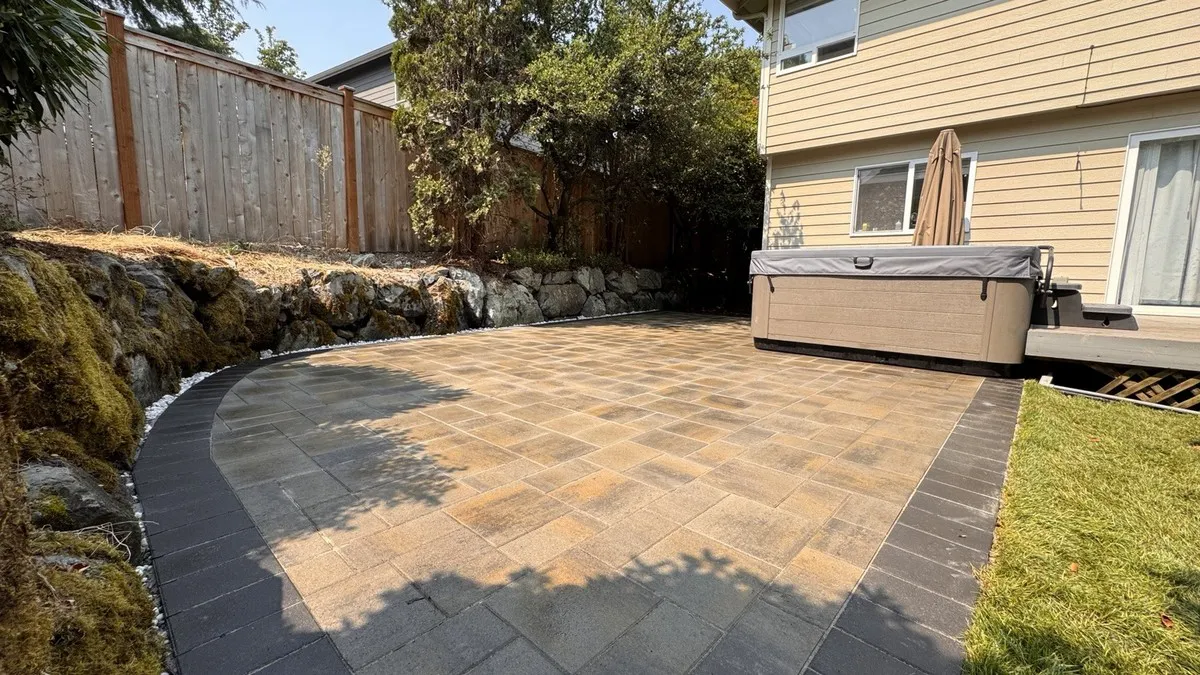
Running bond, herringbone, random or banded patterns change how large, calm or formal a patio feels.
Warm, cool or blended tones, smooth or textured faces, and how each reads against your siding, roof and landscape.
A contrasting border, a soldier course or a curved edge can frame the patio and set it apart from the lawn.
Rectangular patios suit formal architecture; curved perimeters soften a yard and can follow existing beds.
Plan fire, lighting and seating walls at the design stage so utilities and structure are in the right place.
Suppliers & collections
Pavers, slabs and edging come from suppliers and manufacturers we work with or can source through. Browse current collections, then send us the links you like. Product availability, colors and pricing can change, so a saved link is a selection request, not a guarantee.
Primary regional hardscape source for pavers, walls, slabs and masonry.
Visit Mutual Materials (opens in a new tab)Pavers, slabs, walls and outdoor-living systems to browse for color, texture and style.
Visit Belgard (opens in a new tab)Access to current hardscape brands and accessories through SiteOne Landscape Supply.
Visit SiteOne Hardscapes (opens in a new tab)Explore supplier collections, paste the product links you like into your project request, and we will confirm availability, suitability and pricing during design and estimating.
Explore all materials5 Steps
We confirm measurements, grade, access, utilities and where water currently goes before anything is cut.
We excavate to the depth the base needs and set the slope so water leaves the patio and the house.
Base aggregate goes in lifts and is compacted in layers, then screeded to the final grade.
Pavers are set to the pattern, lines are checked as we go and cuts are made cleanly at edges and obstacles.
Edges are secured, joints are filled with jointing material, the surface is compacted and the site is cleaned up.
Real work only
Workmanship coverage and credentials are confirmed in writing with your proposal.
Factors, not prices
More area and more curves or cuts mean more material and more labor.
Narrow gates, long carries and tight staging change how material and equipment get to the work.
Soil conditions, depth to excavate and haul-off of spoils shape the preparation scope.
Product line, size, pattern complexity and borders all influence material and installation.
Slope, catch points and tie-ins to existing drainage can add scope.
Seating walls, steps, lighting and fire features are priced as part of the project.
Every property is different. After we assess yours, your proposal sets out the written scope, options and pricing assumptions.
Paver Patios
A properly excavated and compacted aggregate base with a thin bedding layer. The right depth depends on soil, loading and drainage, so we explain the base we recommend for your site in the proposal.
A well-prepared, compacted base and secured edges are the main defense. Poor preparation is the usual cause of sinking or movement, which is why we spend our effort below the surface.
Often, yes, although exact color and texture matching depends on what is currently available. Send photos with your request and we will advise.
Sealing is optional and depends on the paver and the look you want. We discuss the benefits and upkeep trade-offs during material selection.
It depends on size, access, base and excavation, materials, drainage and added features. After we assess the property we put a written scope and pricing in your proposal.
Tell us what you want to change and any materials that have caught your eye. We will help you understand the right next step.